

Community as a Growth Engine

SaaS companies looking to scale are facing a recurring paradox. Revenue teams are spending heavily to acquire new customers only to see a significant portion churn before realizing lifetime value. In some cases, customers are churning within the first year before even finishing their implementation! While this is happening, marketing budgets are stretched thin, sales cycles are lengthening from months to years, and the cost of incremental growth is rising.
Against this backdrop, a new growth lever is emerging: branded communities. When properly designed, they act as infrastructure for retention, upsell, and advocacy. They reduce dependency on paid channels, create durable feedback loops, and align customers with product roadmaps. This post explores how SaaS companies can use branded communities as growth engines that compound over time.
Why Community is a Strategic Growth Lever
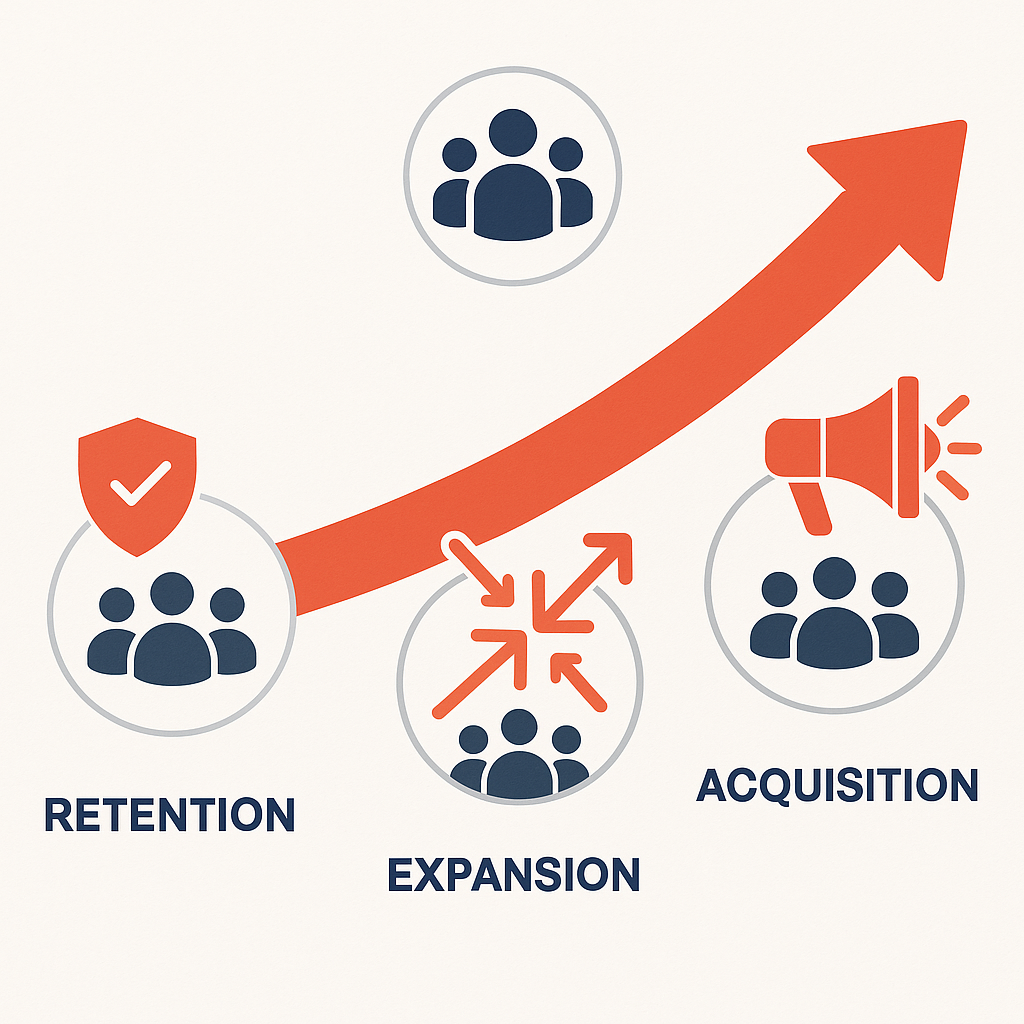
Traditional growth models optimize for top-of-funnel volume. But in SaaS, profitability is determined less by new leads and more by customer lifetime value (LTV) and net revenue retention (NRR). A strong community influences both.
-
Retention Impact: Customers embedded in a peer community are 13 times less likely to churn, according to a ChurnZero/Higher Logic case study. Shared learning and peer problem-solving create switching costs that no feature comparison can replicate.
-
Expansion Impact: Engaged communities shorten the sales cycle for upsells. A customer who sees peers adopting a new module inside the community is far more likely to buy without high-touch sales intervention.
-
Acquisition Impact: Word-of-mouth (WOM) conversion rates in community-driven SaaS models often outperform paid media. What’s important to note is that “WOM leads to more new members and more new members lead to more WOM,” as described in this paper on the “Effects of Word-of-Mouth Versus Traditional Marketing: Findings from an Internet Social Networking Site.”
Taken together, these effects mean that community is not a just another side initiative or content channel. It is critical infrastructure that can be utilized for sustainable revenue growth.
The Phases til Payoff
Executives often ask “how long before a community investment pays us back?” Instead of asking “how long before we see a return” let’s ask “what phases will we go through to see a return”?
-
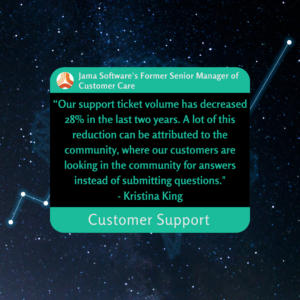
Phase 1: Build foundation. Early engagement is driven by structured onboarding, pilot cohorts, and consistent value delivery. KPIs include participation rates and member-to-member replies. This is where your organization will start to see a reduction in support tickets and increases in operational efficiency. Some tech companies like Jama Software have experienced a 28% reduction in support costs.
-
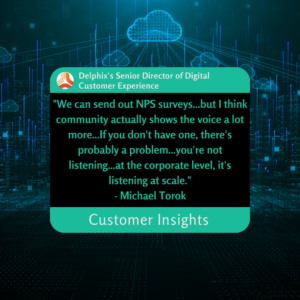
Phase 2: As noted by Todd Nelson in a recent post about The Evolution of Community Use Cases, “online communities are capable of far more than answering support questions.” As you transition from the initial phase to the next, you will start to see network effects emerge. From there, customer-led will conversations outpace company-initiated ones and this will create measurable cost offsets.
-
Phase 3: Growth engine mode. Engagement loops, advocacy programs, and feedback channels are well established. Expansion revenue tied to community influence begins to register in CRM data.
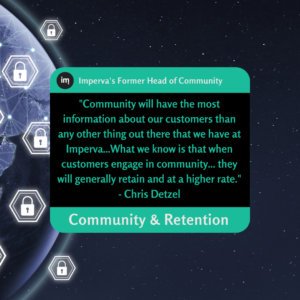
By the time your team moves through these phases, you will have a mature branded community that shows measurable contribution to your NRR, CAC efficiency, and product adoption!
✨ Ask Lonnie About Becoming Community Capable ✨
Before you jump into building your community, you should first determine if you are even in a position to design one! Would you like help seeing if your team is Community Capable? Ask Lonnie AI about it in the chat below!